
IVF failure is not uncommon, and it takes personal strength to press on – again, and again
Hollie and Jared filled their younger married years with lots of travel. They had bought a home and it was a good time to enjoy the freedom to do some globetrotting before they had children. Around age 30, they decided to settle down and start their family, which had always been their plan.
But their journey to parenthood turned out not to be as easy as they had hoped. Nowhere close.
Negative news from ovulation predictor kits
They weren’t getting pregnant, which they thought would be easy. Her doctor said to just keep trying and if it wasn’t working, they could try some medications down the road.
“But I just felt like something wasn’t right, because I was doing home testing with ovulation predictor kits. I was never getting any positives month after month,” says Hollie.
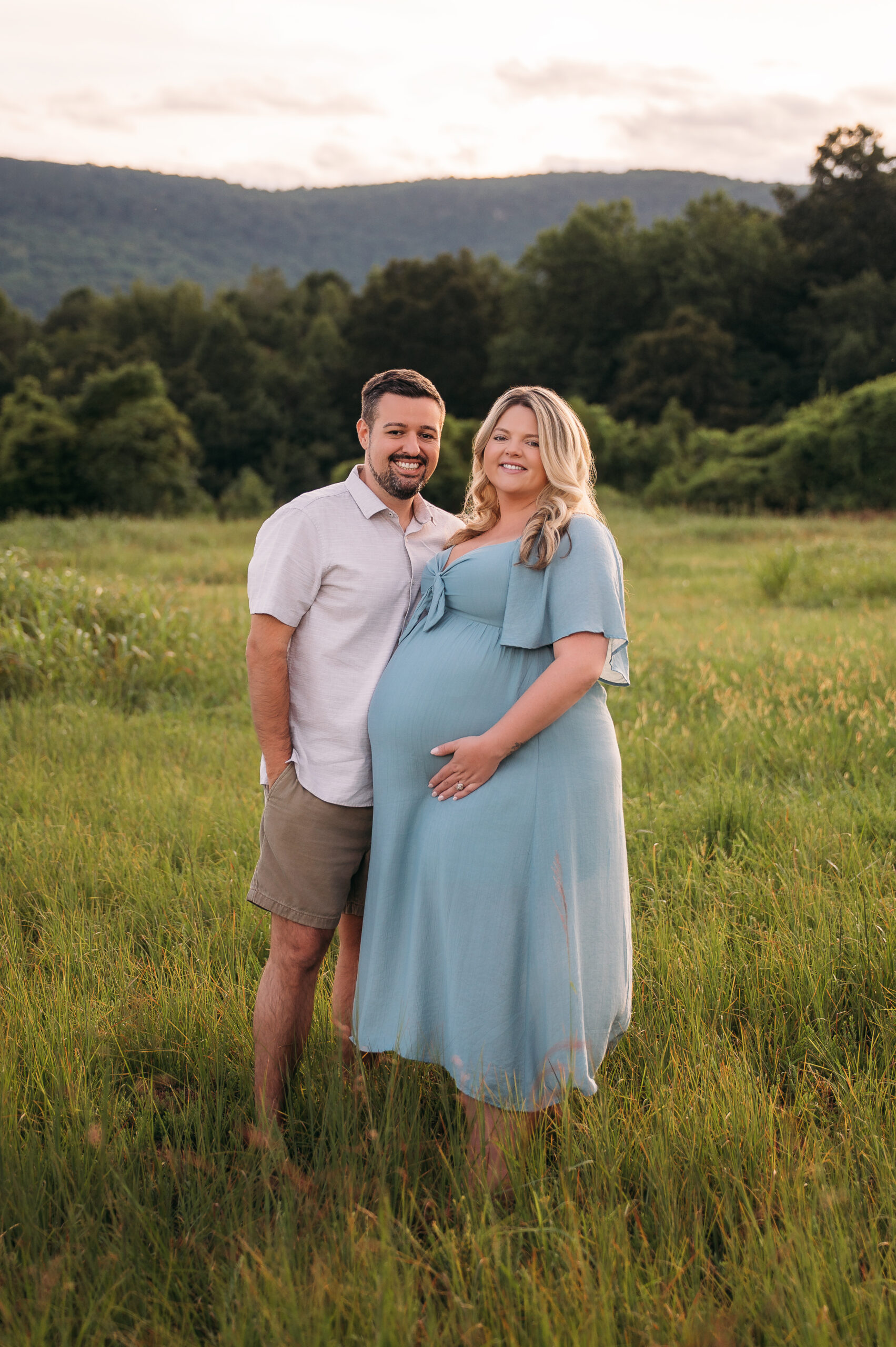
Googling fertility clinic near me leads to diminished ovarian reserve diagnosis
Hollie Googled fertility clinics near her in Chattanooga and saw Tennessee Reproductive Medicine (TRM). “I looked at their reviews and decided to make an appointment,” says Hollie. “They were very nice and were able to get me in really quickly for some initial testing.”
His and hers fertility tests
She got started with fertility testing at TRM and found out that she had diminished ovarian reserve (DOR). This means she had fewer eggs and/or eggs of less quality than other women her age. DOR can make conception difficult. “Gosh, I was 30, and I think my eggs were like those of a woman in her 40s – in quantity and quality,” Hollie recalls. They decided to do fertility testing on Jared, too, and everything there was good.
DOR & blocked fallopian tubes sent them right to IVF
Dr. Jessica Scotchie discussed the situation with the couple. In addition to DOR, Hollie had fallopian tube blockage, making success with intrauterine insemination (IUI) or medication to promote egg production (ovulation induction) highly unlikely. Surgery to correct the fallopian blockage wasn’t pursued due to her poor egg quality and relatively advanced age.
“She recommended that since time was not on our side with the poor ovarian reserve, that we start with IVF [in vitro fertilization],” says Hollie. “I was sort of naive going into this. I thought IVF worked for most people on the first try.”
The first IVF cycle
They did the first IVF cycle, and TRM retrieved 12 eggs. Eight were fertilized into embryos that reached the blastocyst stage. While patients are counseled about IVF outcomes and the drop in numbers from eggs to embryos that is seen in almost all IVF patients, its hard to watch when its happening to you.
“They message you on the patient portal with the results, and in every message the attrition was just terrible,” Hollie recalls. “We would lose multiple embryos overnight, and at the end, we didn’t have any that were left for testing. We were pretty shocked to be honest.”
IVF research and fertility doctor guidance
“Hollie was very neurotic about researching,” says Jared. “She would pretty much be up all night researching or in Facebook groups and blogs, reading, asking questions, just trying to learn and taking in as much information as possible. She was constantly ordering new supplements and vitamins for us to try.”
TRM was another good support resource. “We would always ask the doctors questions,” says Hollie. “Before we started our second round, we had another in-person consult with Dr. Scotchie to go over not what went wrong, but what we can do the next time to hopefully increase our chances.” Dr. Scotchie recommended that Hollie do priming with growth hormones before the next IVF cycle. This can help with ovarian response and egg/embryo quality. Hollie did so for 30 days.
From the second IVF cycle, three embryos make it to PGT
With the second cycle, they ended up with three embryos that made it to day five of development, when they could be sent out for preimplantation genetic testing (PGT). This tests embryos for genetic defects that can result in implantation failure, miscarriage or birth defects in a subsequent child.
“I can remember, I was sitting at my desk at work. I got the voicemail from Dr. Scotchie that all three embryos we abnormal – so all had chromosomal abnormalities,” relates Hollie. “It was just really like a punch in the gut. I left work and sat in my car in the garage and cried. I started to come to the realization that having a family with our own biological children might not be in our future.”
After two IVF failures was it time to quit?
Or was it time to seek another clinic? Jared and Hollie were exhausted, despairing and torn between giving up, trying elsewhere or sticking with TRM.
“We really liked doctors Scotchie and Murray and decided that we wanted to see this through with them,” says Hollie. “They were always open and willing to hear me out with whatever kind of research questions I had about different protocols and medications. That’s not something you always find with doctors.”
Additional insights from PGT
Dr. Scotchie suggested using additional PGT-A analysis (called PGT-A+) of the three abnormal embryos to see if the abnormalities came from the eggs, sperm or developed after fertilization. The results came back that the eggs were the source of the genetic abnormality.
“At this point, I started to just lose hope,” says Hollie. “But a part of me is really competitive too. So I thought, You know, let me put everything that I have into this next cycle.”
Switching from frozen embryo transfer to fresh
Previously only considering frozen embryo transfers so they could do PGT to test embryo viability, the couple asked about doing a fresh transfer – without PGT. TRM agreed. They had changed medication protocols with each previous cycle and would do so again to adapt to a fresh transfer.
Their minds were set on one last try, but they wanted to give themselves and her body a break before three back-to-back IVF cycles. Hollie prepared with 90 days of growth hormone priming and several vitamins and supplements to be ready after the holidays for IVF #3.
Altering IVF protocols almost daily
When the time came for the third cycle, TRM monitored the retrieval a little bit more closely than before. “I was going in almost every day and the weekends for monitoring and they were just about changing the med protocol daily,” Hollie says.
They wound up with four embryos. TRM and the couple agreed to implant two embryos since this was their last IVF cycle. Implanting one embryo, called elective single embryo transfer (eSET), is most often the goal in IVF, but some circumstances allow for two.
Day three embryo transfer, followed by tears
They had four embryos and two that looked good at three days of development. Dr. Murray wanted to move forward with the fresh transfer.
They had two embryos left, which they froze and tested with PGT. One came back normal. Hollie says, “That was the first normal embryo we had out of all three cycles.”
The two-week waiting period
Were the implanted ones also normal? Hollie was testing herself at home before going back to TRM for the two-week HCG testing, human chorionic gonadotropin hormone testing that indicates embryo implantation. “I knew that at least one embryo had implanted because I was getting positive pregnancy tests at home.”
“When we went in for the first ultrasound, Dr. Scotchie said that both embryos had implanted,” says Hollie. “We could hear both their heartbeats that day.” “And we all three cried,” adds Jared.
Weekly ultrasounds, cautious optimism then twins
They were going back weekly to TRM to track the twins’ progress. They were optimistic, but cautiously: Things could still go wrong, particularly due to their previous genetic issues with their tested embryos. When they later graduated to their OB-GYN, they did fetal blood testing, NIPT (non-invasive prenatal testing), to screen for genetic issues. The first two results came back inconclusive, and that made them nervous. The next test results indicated two genetically normal boys.
“But it was still really early on, so at each doctor’s appointment, you hold your breath and hope that both of them are still growing well.”
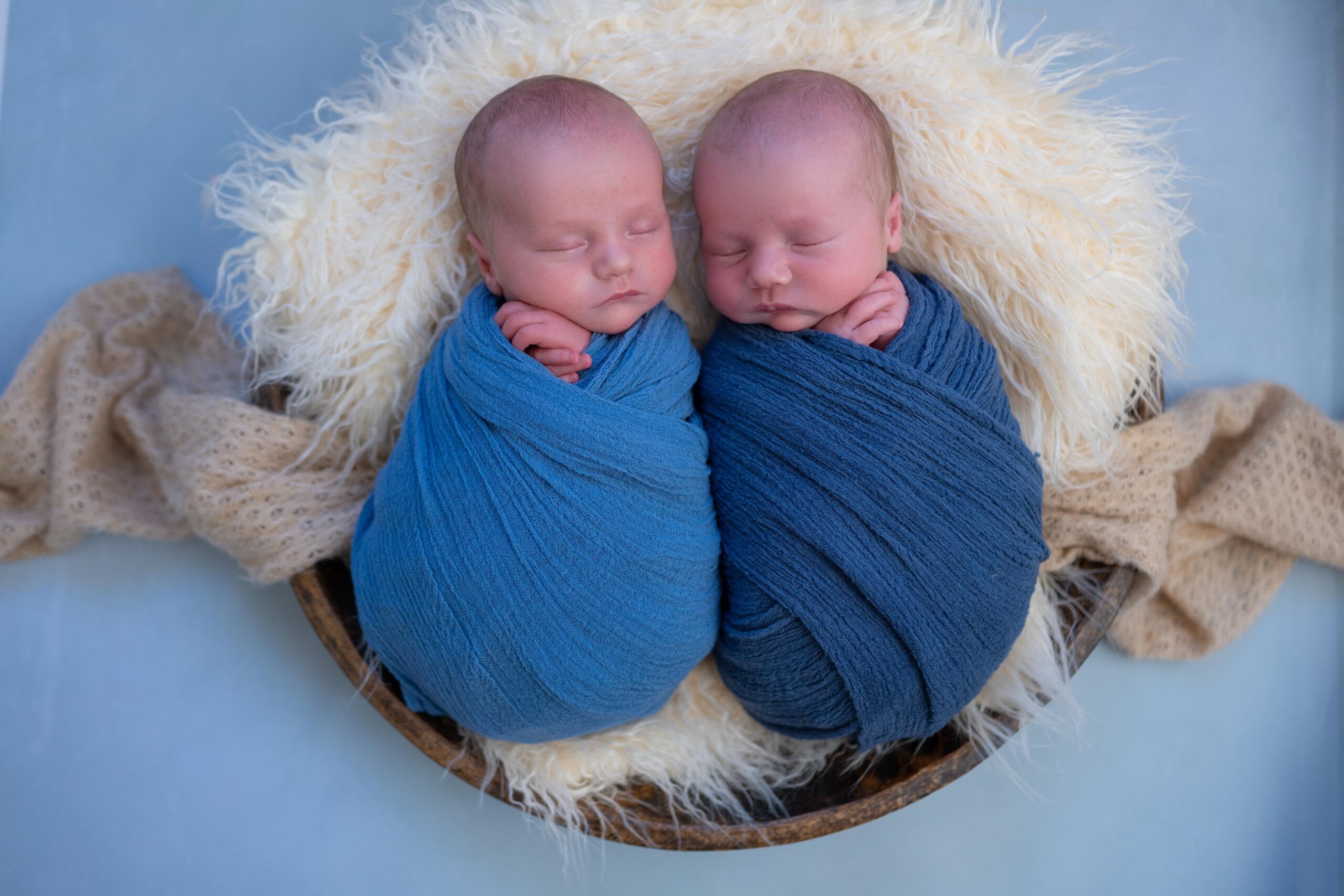
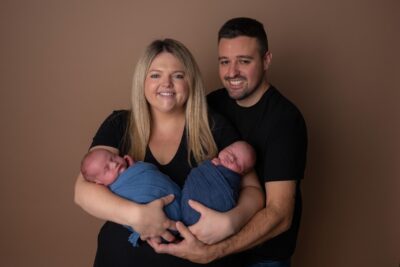
Things did go well. “Our twin boys, Isaac Nathan and Owen Zachary, were born on October 15, 2025, and we are so in love with theses miracles,” says Hollie.
Advice for others experiencing IVF failure
The couple who thought about quitting after IVF failure has some advice for others.
“I would say listen to your body and have conversations with your doctor about how you’re feeling about it.”
It takes a lot of hard work and emotional involvement – and for us a lot of prayers. And we just feel super grateful.” – Jared
“If you need a break, take a break. I knew after that second cycle I needed a break physically and mentally, and that’s okay.”
“Frequently check-in with your partner if you’re doing this with someone, to make sure you’re on the same page.”
“Realistically, how many cycles are you willing to endure if you don’t see results? The physical and financial aspects all play a part in undergoing multiple IVF cycles.”
“It is just like trial and error. You don’t know how your body is going to respond – and I thought mine was going to do great. So be prepared for things not going as you may have planned.”– Hollie
Expert Treatment. Total Commitment. TRM.

At Tennessee Reproductive Medicine, you’ll find a team of professionals dedicated to delivering the highest quality of compassionate fertility care.