
Kelly’s chromosome translocations confirmed by karyotype test meant next-to-nothing odds for natural conception
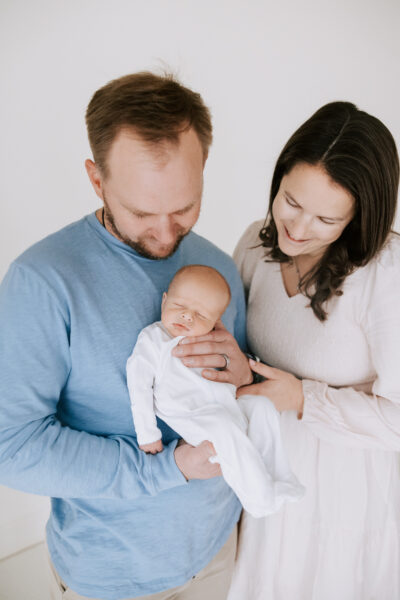
Kelly Ellenburg, a school teacher from Fort Oglethorpe, GA, right outside of Chattanooga, didn’t know about chromosome translocations, karyotype genetic testing or preimplantation genetic testing (PGT). But as soon as Dr. Rink Murray at TRM started talking to her about genetic issues being a possible problem, Kelly and her husband, Nic, started researching those topics.
Like most people, the couple weren’t very familiar with many aspects of infertility or its treatment. But they learned fast and leaned into the advances in the science of genetics and fertility medicine such as karyotype genetic testing.
From miscarriage to bicornuate uterus to TRM
It all began after her OB-GYN suggested that a bicornuate uterus was the cause of her first miscarriage in November 2022. At the time Kelly wasn’t sure what that was either (it’s a misshaped uterus, like a heart, that can cause pregnancy complications).
“I knew nothing about a bicornuate uterus. I got pregnant and had an unfinished miscarriage,” says Kelly about the start of her fertility travails. “They had to do a D&C [dilation and curettage], and when they did the follow-up for that with ultrasound, they thought I had a bicornuate uterus.”
Her Chattanooga OB-GYN referred her to Tennessee Reproductive Medicine, and the investigation shifted into high gear. Dr. Murray did testing for bicornuate uterus and didn’t think that was the issue causing the miscarriage.
Karyotype genetic test reveals chromosome translocations
Other testing indicated a blood clotting issue. Around this time, she and Nic got pregnant again, naturally. Only to have another miscarriage in August of 2023. D&C again.
“They did testing on the fetus and found that it had three of the number 13 chromosomes,” Kelly explains. “Then they did karyotype genetic testing on me and found the translocations of the 13 and 15 chromosomes.” At that point she knew she could try again naturally – but the chance of an embryo being genetically correct was low. “That was when we decided to do IVF.”
Risks of chromosome abnormalities in embryos
An embryo inherits 23 chromosome pairs, one from each parent, for a total of 46 chromosomes. Chromosomal abnormalities are either numerical (one missing or one too many) or structural. A chromosome translocation is an abnormal structural rearrangement in which either two chromosomes exchange parts or one chromosome breaks off and attaches to a different chromosome.
The result is a rearrangement of genetic material that can cause a number of serious genetic conditions and development issues in a child. The translocation increases the chance of miscarriage, a still birth and early death of the child.
The karyotype test showed Kelly’s translocation in chromosome 13 involved an additional chromosome in the normal pair for 3, which is known as Trisomy 13. This is also called Patau syndrome. Translocation of chromosome 15 also increases the risk of infertility, miscarriage and birth of child with serious genetic issues.
Related reading: Preimplantation genetic testing (PGT) identifies chromosomal abnormalities in an IVF embryo
“It was distressing to find my chromosomes were messed up”
“It was a lot, but we both knew that we wanted more children. We discussed all the options – adoption, IVF all those things – but I always wanted to have a baby,” says Kelly. “And because of how far science and technology have come, fertility specialists were able to test every single embryo and make sure they were medically correct before implanting them.”
With controlling the genetic issues not an option, and because Kelly had really good eggs, IVF (in vitro fertilization) was the best option.
A fertility journey on TRM’s tight ship, personable and open
Kelly says driving to TRM for treatment was not an issue, as her home in Georgia is only 20 miles away and she gets all her medical care in Chattanooga. “hey run a very tight ship, but they are also very personable and open about their thoughts and feelings about imposing on you. I really like them.” Kelly says.
“I love TRM, and if I could have stayed there through my whole pregnancy, I would have,”
She was also very comfortable with the practice’s focus on advances in the science of genetics and fertility medicine.
IVF vs. natural conception
Dr. Murray said he didn’t think IVF would be a huge production for Kelly (“And it wasn’t, ending up being fairly easy – as easy as IVF can be,” says Kelly). “So we made that decision to make one more go round and see what happened.”
Not having health insurance that covered IVF, this was a big decision. Another factor was Nic being away on deployment in the Army at this time.
Though the extra deployment money helped on the financial end, not having Nic present for the IVF steps of egg retrieval and embryo implantation wasn’t easy. “My mom came in a bunch and my sister-in-law was with me during the transfer, and that was very helpful and very supportive.”
Fertility science helps overcome genetics
They did two egg retrievals. After waiting a couple of months, they did the preimplantation genetic testing on the embryos to check for abnormalities such as translocations again.
“We got 22 embryos but only two were genetically correct. That’s why they said there was such a small chance of me getting pregnant naturally.”
PGT was the right choice when karyotype test found genetic issues

They did the transfer in June, and the first implant worked. Two retrievals, one transfer and that worked. Kelly says her pregnancy was great – “until 36 or 37 weeks, then I developed severe preeclampsia and had to have an emergency C-section.”.
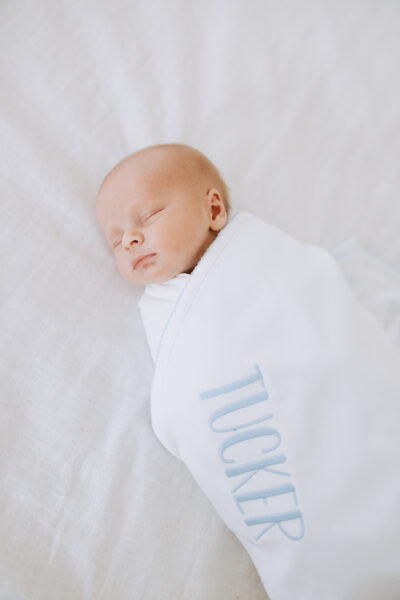
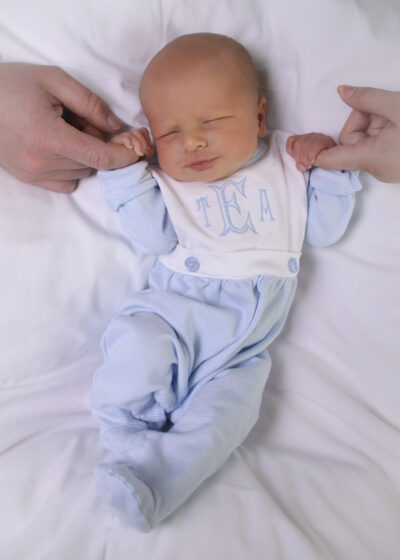
Tucker was 3 ½ weeks premature, but 6 pounds, 4 ounces and he was perfect,” says Kelly. She and Nic were sure that PGT was definitely the right choice.
The couple has one frozen embryo left at TRM, and they are considering their options and desires. One cause for concern is that the preeclampsia during Kelly’s pregnancy was pretty scary.
Sharing her story to fight stigmas about infertility
Kelly has been very open with everybody about her genetic issues, miscarriages and the IVF process. For a purpose.
“I don’t feel infertility is talked about enough. And people, especially women, feel ashamed when they have to go through things like this, including miscarriages. I just don’t think this should be a stigma anymore,” Kelly says of her decision to talk about her story. “People are not very well informed on this, and that is part of the problem.”
Advocating for sensible laws on fertility care
She also sees problems with some legislative attempts to strictly regulate reproductive rights and fertility treatments. Kelly keeps abreast of efforts in Tennessee, such as a constitutional amendment that would recognize embryos as people, which could end IVF treatment, and a recent bill that sought to restrict the number of embryos a parent could freeze.
“I am on top of all that in Tennessee and in Georgia, which isn’t much different,” says Kelly. “Before I would have never known, but since this has all happened to me, I have tried to stay on top of it and do my best to advocate for these things and sending emails.”
She is not in favor of laws that would restrict IVF or limit the number of embryos one can freeze. “When you get 2 out of 22 embryos that are genetically correct, it really is like playing the odds at Vegas. There was no point in me trying naturally. And if restricting the number of embryos I can freeze, I would be doing retrieval and failure over and over again, which I can’t afford. It’s absolutely ridiculous.”
Expert Treatment. Total Commitment. TRM.

At Tennessee Reproductive Medicine, you’ll find a team of professionals dedicated to delivering the highest quality of compassionate fertility care.